
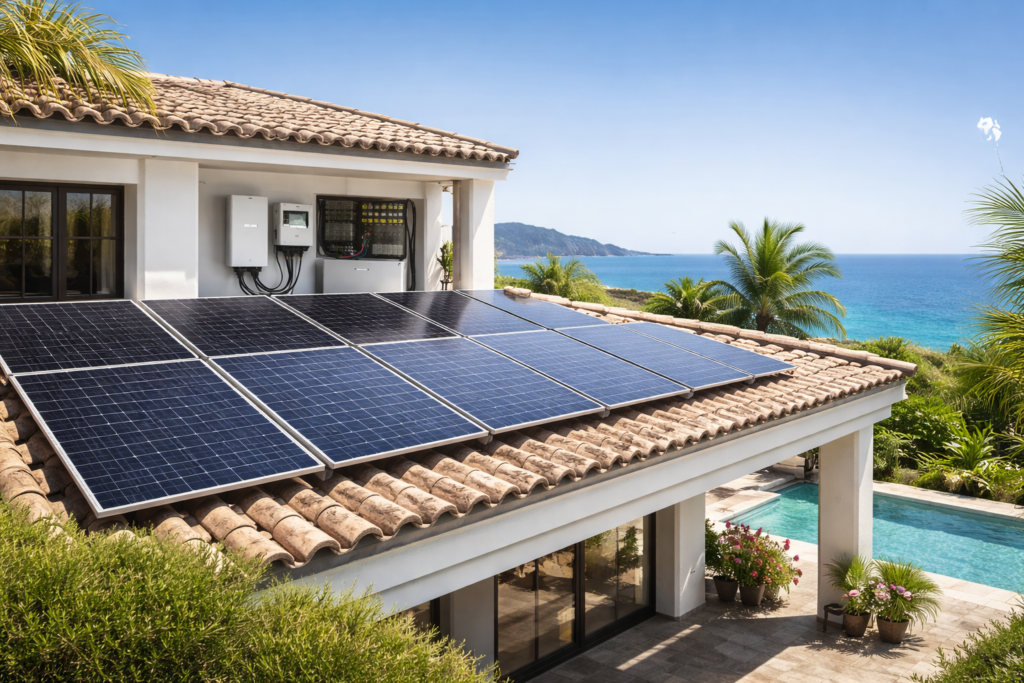
Solar generation and battery storage are often planned as part of the same residential energy upgrade. Solar panels produce electricity during daylight hours, while batteries allow that energy to be stored and used later. When these systems are considered together they create a more stable and efficient energy setup for the property.
Many villa upgrades begin with solar panels, but without storage much of the generated energy may be exported to the grid or used inefficiently. Integrating battery storage allows homeowners to retain more of the energy produced on site and use it when demand is highest.
Solar Generation
Solar panels convert sunlight into electricity during daylight hours. In Mediterranean regions this can provide a substantial portion of a home’s daily energy requirements, particularly during the long summer months.
The performance of a solar system depends on roof orientation, panel placement and system size. These factors determine how much energy is generated and when during the day peak production occurs.
Solar generation is typically the starting point of a residential energy system. Learn more about residential solar systems on the Solar Generation page.
Battery Storage
Battery systems store surplus electricity produced by solar panels during the day. Instead of exporting excess power to the grid immediately, the energy can be stored and used later when the home requires it.
This stored energy often supplies evening electricity demand, when solar production has fallen but household consumption is increasing. Battery systems therefore extend the usefulness of solar generation beyond daylight hours.
You can explore how storage systems operate in more detail on the Battery Storage page.
Balancing Energy Demand
Planning energy demand is an important part of integrating solar and storage systems. Homes use electricity in different patterns throughout the day, and understanding those patterns helps determine the appropriate system size.
Large appliances, heating and cooling systems, and electric vehicle charging can all influence energy demand. By analysing when energy is consumed, homeowners can design systems that balance generation, storage and usage more effectively.
More detail on this process is explained in Load Planning.
System Integration
Solar panels, battery storage and household energy demand are all connected through a central control system. Inverters, energy management systems and monitoring tools coordinate how electricity flows between generation, storage and household consumption.
When properly integrated, these components allow the system to automatically manage energy production and use. This helps maintain stability, maximise efficiency and reduce reliance on grid electricity.
You can learn more about how these components work together on the System Integration page.
Return to Energy Systems.