
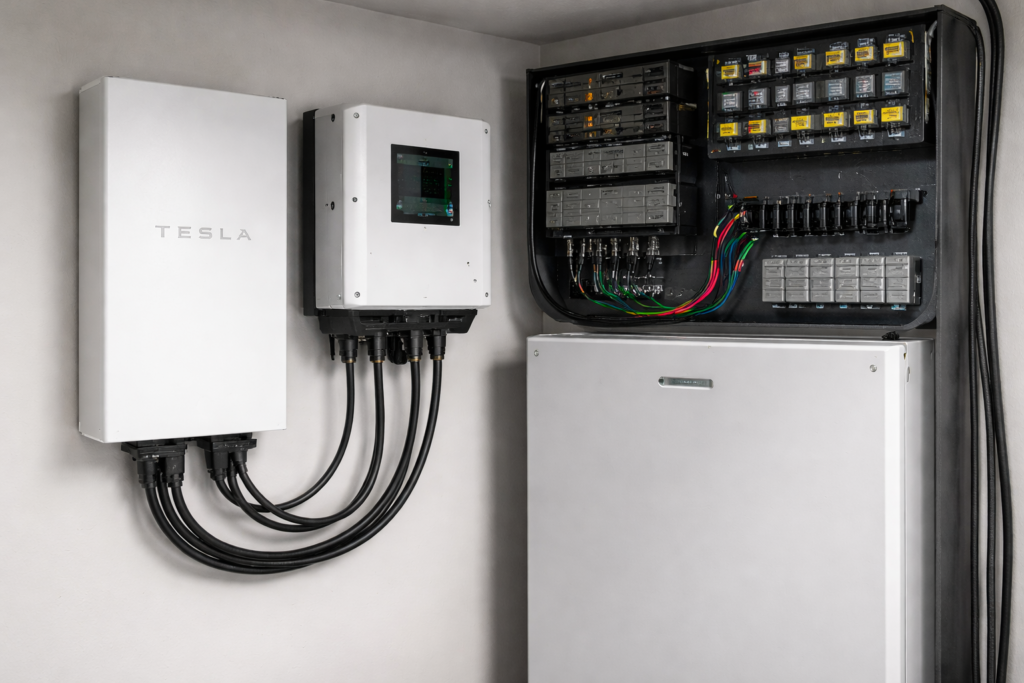
Planning electrical capacity is an important part of residential energy upgrades. Solar generation and battery storage can significantly change how electricity flows through a property, and the existing electrical infrastructure must be able to support these changes.
Many villas were built before modern energy systems were common. As a result, distribution boards, cable capacity and grid connections may not always be configured to handle higher levels of generation or storage. Considering electrical capacity early in the planning process helps ensure that new systems operate safely and efficiently.
Solar Generation and Electrical Infrastructure
Solar panels produce electricity that must pass through an inverter before entering the home’s electrical system. The capacity of the inverter and the main electrical panel determines how much power can be safely integrated into the property.
When solar systems are planned without considering existing infrastructure, upgrades to distribution boards or protective devices may be required later. Reviewing the relationship between generation capacity and electrical infrastructure helps avoid unexpected changes during installation.
Learn more about system design on the Solar Generation page.
Battery Storage Requirements
Battery systems introduce additional electrical components that interact with the home’s power supply. Charging and discharging cycles place different demands on the electrical system depending on how the battery is configured.
Some battery installations connect directly to the home’s main distribution board, while others integrate through hybrid inverters. In both cases, planning electrical capacity ensures that storage systems operate correctly alongside solar generation.
You can explore these systems further on the Battery Storage page.
Understanding Household Energy Demand
Electrical capacity planning also depends on how a property consumes energy. Air conditioning systems, electric vehicle chargers and pool equipment can significantly increase demand.
Understanding when and how electricity is used throughout the day helps determine appropriate system sizes and configuration. This process often forms part of the broader energy design strategy for the property.
More detail on analysing electricity demand is explained in Load Planning.
Coordinating the Energy System
A complete residential energy system connects generation, storage and consumption through a coordinated control structure. Inverters, protection devices and monitoring systems ensure that electricity flows safely between components.
Planning electrical capacity helps these elements work together as a coherent system rather than as separate installations. This integrated approach is particularly important in homes that combine solar panels, batteries and smart energy controls.
Learn more about how these components interact on the System Integration page.
Return to Energy Systems.